How to Build Confidence in Children
- Hannah Nida
- Aug 16, 2022
- 7 min read

Updated: Aug 23, 2022


Simple things we can do as a parent or caregiver to give our children the self-esteem they need to live a happy healthy life. Often times, we as busy adults with 100,000,004 things to do, can forget that our kids are just that: kids. They want to be messy, they want to be loud, they want to run around the house like they just got hopped up on a pound of candy. How many times do we tell them to sit still, be quiet, or don't even give them the opportunity to explore mess? Sure, you can't always run around screaming your favorite song while banging on a drum through a blanket fort of toys, but those atrocious sounds and unsightly forts are so necessary for their development.
Now, just jumping into letting go of these anxieties will take some work and time on your part. The points I'll make in this post isn't a blueprint; rather a guide to help you work on your relationship with your little, as well as mold them into the amazing creatures they're meant to be. Because how we teach our kids is just as important as what we're teaching them. As an angry mom, working on establishing a new outlook on how my kids... kid, was huge! It not only changed the atmosphere in my home, but also the relationship my kids shared with me. Which in turn, changed our whole teaching/learning experience!

Love: Love is so important. It really creates a solid foundation for the building blocks that make up the tiny humans we love. Sure, we love our children. Naturally. But it is so easy to not show that love by telling them "just five more minutes," or "not right now," or being so far sucked into our phones we are just not present during these precious years. Yes, it happens! The internet is so overloaded with mass amounts of information, it's hard not to sometimes.
Practice this: When your child speaks to you, practice putting down whatever you're working on to listen to them. Whether they tell you a 15 minute story about their rocks (not even kidding, my daughter just did this), explaining the piece of art they just created, or are just asking for help putting their socks on.
Be available: Even when it's not so convenient for you. By showing that we are available (physically and emotionally) now, we are showing them that they can trust us to be available when they need us as they grow older. This can look like time spent doing a craft, working on a project, or reading a book together. Being available is making time specifically for some one on one time with your child.
Practice this: Schedule a time in your daily routine to being completely available for your child. Our days here get mighty hectic with three rambunctious girls and all the things we need to get done daily. If we don't manage to get any one on one time during the day, we always look forward to bed time when I will read a chapter or short story of whatever book they choose.
Understanding: Acknowledge emotions as the right that they are. Just because it is considered a negative emotion, it is still a very real emotion that they are feeling. Our job as a parent is to understand that and still love them during the process. This is something I personally have struggled with. Like I mentioned before, I have been an angry mom for a long time. So naturally, I set my kids up to be angry like me. Sponges, their brains are! Anyway, I started looking online on how to better manage anger for my kids. I realized during that search, the angry kid in me never really had proper time to learn about my emotions and how to handle them. Would I be so angry now? I have no clue, but I did know that I needed to do something about it to give my kids the resources to not deal with this same issue.
Practice this: Find a chart with faces that show a certain emotion. Go through the chart asking your kids what the emotion is, how it makes their body feel, and ways that we can cool down before it gets out of control. I would recommend talking about emotions before anger, anxiety or sadness takes over their body. Check out the anger thermometer and anger iceberg.
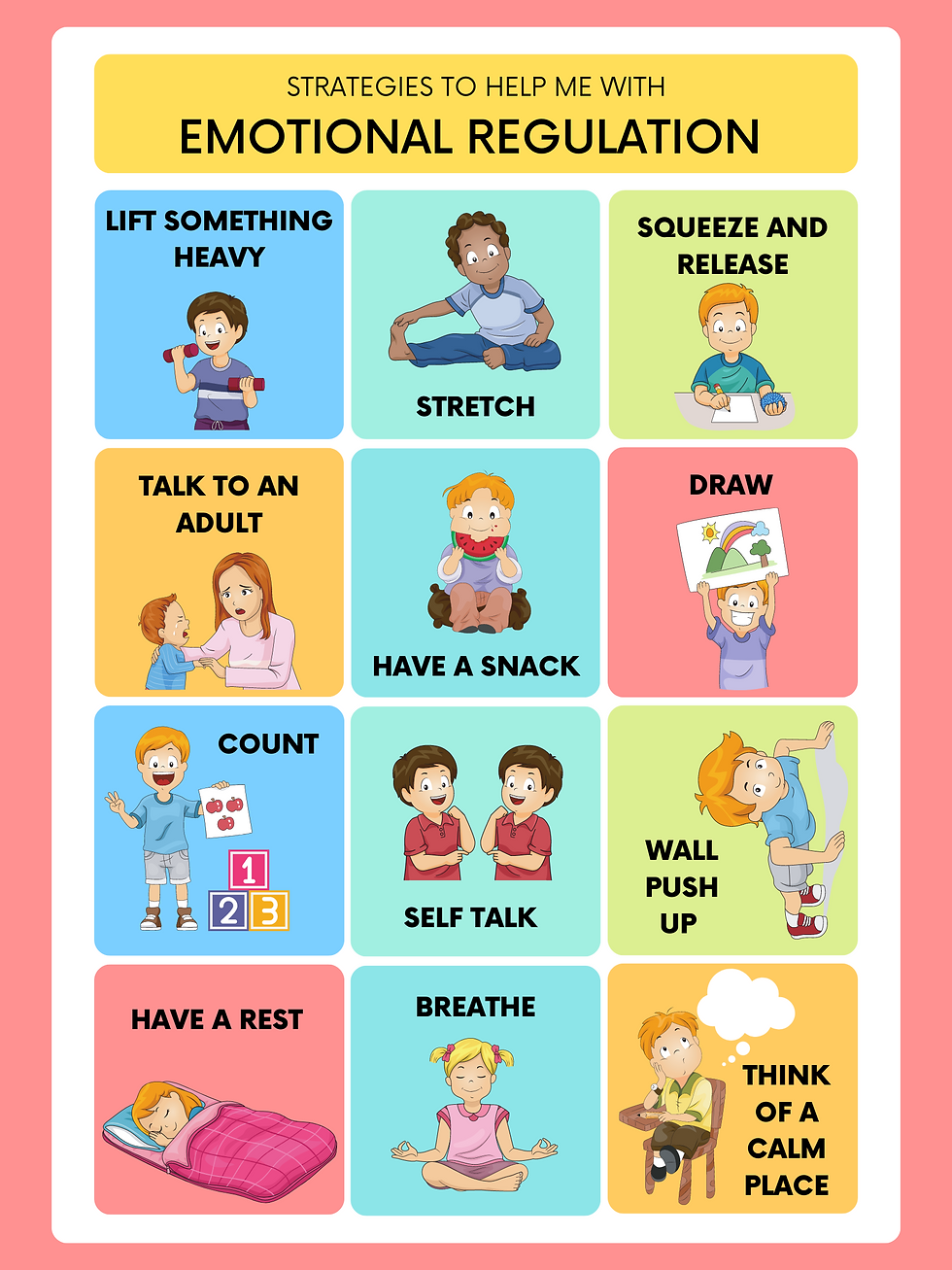
*If you are having trouble expressing your own emotions, first help yourself and I promise your little sponges will soon follow your lead! Once I started paying attention to the way my own body felt, it became easier to get a grip on my emotions.
Point out positives: Like strengths that they show (ex. leadership, teamwork..etc), skills that they have worked hard to improve, or how well they're growing in general. Tiny simple compliments gives your child an instant significant boost in confidence.
Practice this: Start giving compliments to your child everyday. Be specific.
Let children take the lead: This can go multiple ways. Scenario #1. You ask what your child's favorite thing to do is. Immediately, you start listing off all of these fun things that you do together. Your child will likely pick from the last thing they remember, instead of answering this genuinely with what probably really made them happy. Another relative instance would be if your child has something they want to talk about, but they don't quite know how to bring it up (whether embarrassed, confused or fearful).
Scenario #2. Playing a game, building something, learning something.. it is so easy to take over and just "get it over with." I know, I know. It happens! However, if you take over, it prevents that child from ever having the opportunity to do something great. I think this is why the process of art is so useful. It is an excellent opportunity for kids to express themselves by creating something totally and completely unique - just like them, and being able to take pride in the masterpieces they created.
Practice this: Let go and let them take the lead. Whether talking, building, or creating. Let go of any expectations, negative thoughts and just go with the flow of your sweet little. Even if they are confessing a wrong. When they are being honest with you, is the most important time to let them take the lead.
Let children be of help to you: When you let your kids help you, not only does it build their confidence in themselves, but also lets them know that they are trusted by you. My 5 year old, Ellie loves to help. When her youngest sister was born in April, she was just amazed by her. Although born at 39 weeks, she spent a week in the NICU due to respiratory issues. Ellie knew we were stressed and tired when we got home and she was very attentive to when I may have needed help so she'd always ask to assist me in one way or another. I never denied her because honestly; I absolutely needed it. However, I never asked her for help even though she clearly wanted to. Until one day she had found me crying. I was an emotional wreck, not being able to keep up with the house and the kids and I was obviously not hiding it very well (this brings up my next point!!). She comes in and says, "Mom. I'm here. If you need any help with the baby, just ask." As she nonchalantly shrugs her shoulders and comes over to give me a hug. After having that special moment with her, I started to be more available to asking her for help. Asking her to help during my time of vulnerability ended up bringing us closer as a mother and daughter.
Practice this: Big or small, no matter the task.. ask your bub to help with a task. When you allow them to help you, you are empowering them to feel trusted, valued and appreciated.
Be transparent: Heavy or light, it's truly unnecessary to shelter your kids from real life. If a question rises, and trust me, they will. They always do. Don't scoot around the real life answer. Don't pretty it up. Don't lie. I am very fortunate to homeschool when it comes to this. Facts may seem scary at first to kids, but facts help them understand the world a little better. For instance, Ellie (oh, my curious Ellie), asked me about growing up. We then got into a whole lesson about the circle of life. Cue our interactive life science journal for reference!
Practice this: When your child asks a question and you notice yourself going for a masked up route or about to tell a flat out lie - whether it is to protect from the ugly, or to bribe them into doing/not doing something, just be real. Open yourself up as a resource for your children to receive clear and straightforward facts so they will be more willing to come to you in the future. When giving big facts about life, turn it into writing or art. For instance, the life cycle of a salmon, or frog, or flower.
Involve children in choices: These choices can be for something as simple as what kind of sandwich they'd prefer (pb&j or grilled cheese), to what kind of chore they'd like to help with that day (gather all dirty laundry or pick up and put away all toys).
Practice this: Let your child choose between two options at least one time today! Choices are a fun way to learn what the better decisions may be, as well as learn about natural consequences of those choices.
Exercise together: Exercising together can look like trying to do pull ups, practicing proper weightlifting, going on hikes together, and anything in between. All of these activities can test our minds and bodies which makes it perfect for creating healthy habits which form healthy bonds. My girls love to join my husband and I when we work out using the pull up bar or bio flex. They love to take turns and show off how strong they are. The confidence boost they get from doing a workout with us is immediate. I just love it!
Practice this: Simon says is a really great way to introduce exercises. There are also Youtube channels made just for kids that you can turn on and start.. they'll be sure to follow!
Give more hugs!



If you were to look through these techniques to be a better human while raising one (or many) yourself, what is something that you need in every one? Love. Love is everything.
Disclaimer* I am not a child development professional. These are things I have learned to make an enormous difference in my own relationship with my kids.

Comments